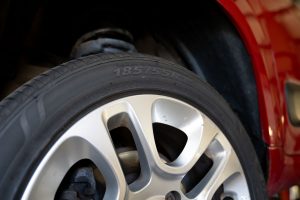
Need new tyres but not sure what size your car needs? You’re not alone! Understanding the numbers and letters printed on your tyres can seem confusing, but they’re actually quite straightforward once you know what to look for.
Your tyre size tells you important information about the tyre’s dimensions, construction, load capacity and speed rating. Choosing the correct tyres is essential for safe driving, handling and vehicle performance.
At Bright Motors, we supply and fit a wide range of car tyres in Shrewsbury and van tyres in Shrewsbury, helping drivers find suitable tyres for their vehicles.
In this guide, we’ll explain where to find your tyre size, what the numbers mean and how to make sure you’re choosing the right replacement tyres.
Where Can I Find My Car Tyre Size?
The easiest way to find your tyre size is to look at the sidewall of your existing tyres. This is the outer side of the tyre, where you’ll find a series of numbers and letters printed into the rubber.
For example, you might see something like:
205/55 R16 91V
These markings tell you the tyre’s width, profile, construction, wheel diameter, load index and speed rating.
You can also find information about your vehicle’s approved tyre sizes in several other places:
- Vehicle handbook: Your manufacturer’s handbook should include information about approved tyre sizes and specifications.
- Driver’s door area: Many vehicles have a tyre information sticker inside the driver’s door opening or on the door pillar.
- Fuel filler flap: Some manufacturers display tyre size and pressure information inside the fuel filler flap.
- Your local tyre garage: If you’re unsure, a professional tyre fitter can help identify the correct specification for your vehicle.
Remember that the tyres currently fitted to your car aren’t necessarily the correct specification, particularly if you’ve purchased a second-hand vehicle or changed your wheels.
What Do the Numbers on Your Car Tyres Mean?
Let’s break down a typical tyre size:
205/55 R16 91V
Each number and letter represents something different.
205 – Tyre Width
The first number represents the width of the tyre in millimetres.
In this example, the tyre is 205mm wide.
55 – Tyre Profile
The second number is the tyre’s aspect ratio, sometimes called its profile.
This represents the height of the tyre’s sidewall as a percentage of its width.
In our example, the sidewall height is 55% of the tyre’s 205mm width.
R – Tyre Construction
The letter R stands for radial construction, which is used on the vast majority of modern passenger car tyres.
Radial tyres have internal reinforcing cords arranged radially across the tyre, helping provide stability and performance.
16 – Wheel Diameter
This number indicates the diameter of the wheel rim that the tyre is designed to fit, measured in inches.
In this example, the tyre is designed for a 16-inch wheel.
91 – Load Index
The load index indicates the maximum weight a tyre can support when used under the specified conditions.
A load index of 91 corresponds to a maximum load of 615kg per tyre.
It’s important to choose tyres with a load rating that meets your vehicle manufacturer’s requirements.
V – Speed Rating
The final letter represents the tyre’s speed rating.
A V-rated tyre is approved for speeds of up to 149mph (240km/h) under the applicable conditions.
Different tyres have different speed ratings, and replacements must meet the requirements for your vehicle.
Tyre Size Explained: A Quick Reference Guide
Marking | Meaning | Example |
205 | Tyre width | 205mm |
55 | Tyre profile | 55% of width |
R | Construction | Radial |
16 | Wheel diameter | 16 inches |
91 | Load index | 615kg (per tyre) |
V | Speed rating | 149mph |
These markings help tyre fitters identify suitable replacements for your vehicle.
Why Is Choosing the Correct Tyre Size Important?
Fitting the wrong tyre size or specification can affect how your vehicle handles, brakes and performs on the road.
Your vehicle manufacturer recommends particular tyre sizes and specifications based on factors such as vehicle weight, suspension design and performance requirements.
Choosing suitable tyres helps maintain:
- Safe handling: Correctly specified tyres help your vehicle respond predictably when steering and cornering.
- Braking performance: Suitable tyres are important for maintaining grip and effective braking.
- Load capacity: Your tyres must be capable of safely supporting the vehicle and its permitted loads.
- Driving comfort: Tyre dimensions and construction can influence ride comfort and road noise.
- Vehicle compatibility: Incorrect tyre sizes may affect speedometer accuracy, clearance and the operation of certain vehicle systems.
Some vehicles also use different tyre sizes on the front and rear wheels, so it’s important to check the manufacturer’s specifications rather than assuming all four tyres are identical.
Can I Fit a Different Tyre Size to My Car?
In some circumstances, vehicles can accommodate alternative tyre sizes, but this depends on the manufacturer’s approved specifications and the wheels fitted.
Changing tyre dimensions can affect the overall rolling diameter, handling, speedometer accuracy and clearance around the wheel arches or suspension.
It’s also important to consider the tyre’s load index and speed rating.
For these reasons, you shouldn’t simply choose a different tyre size because it’s cheaper or more readily available.
If you’re considering changing your tyre size, speak to an experienced tyre fitter who can check whether the alternative is suitable for your vehicle.
Are Car Tyre Sizes and Van Tyre Sizes Different?
Car and van tyres use similar sizing markings, but vans often require tyres designed to carry heavier loads.
For example, a van tyre might display:
215/65 R16C 109/107T
The numbers follow a similar format to car tyres, but there are some important differences.
The letter C identifies a commercial tyre specification, commonly used on vans and light commercial vehicles.
The two load index numbers, 109/107 in this example, indicate the tyre’s load capacity when fitted in single-wheel and dual-wheel configurations respectively.
Not every van requires a C-marked tyre, so it’s important to follow the manufacturer’s approved specifications.
At Bright Motors, we also provide van tyre fitting in Shrewsbury, including larger and high-roof vans.
Our experienced team can help you choose suitable tyres with the correct load rating for your vehicle.
How Do I Know If I Need New Tyres?
Knowing your tyre size is useful when ordering replacements, but it’s equally important to recognise when your existing tyres are becoming worn or damaged.
Some common warning signs include:
- Low or uneven tyre tread
- Cracks, cuts or bulges in the sidewall
- Frequent loss of tyre pressure
- Unusual vibrations while driving
- Reduced grip, particularly in wet conditions
For most passenger cars and vans up to 3,500kg, the legal minimum tread depth in the UK is 1.6mm across the central three-quarters of the tread, around its entire circumference.
If you’re concerned about your tyres, arranging a professional inspection can help determine whether they need replacing.
For more information, read our guide to 7 Signs Your Car Tyres Need Replacing.
Need Help Finding the Right Tyre Size in Shrewsbury?
If you’re still unsure which tyres your vehicle needs, don’t worry. The team at Bright Motors is here to help.
Based at our independent garage in Battlefield, Shrewsbury, we supply and fit budget, mid-range and premium tyres from a wide range of leading manufacturers.
Whether you drive a small hatchback, family car, 4×4 or van, our experienced tyre fitters can help identify suitable tyres for your vehicle and driving requirements.
As a Davanti Approved Tyre Dealer, we offer a range of quality mid-range tyres alongside brands including Michelin, Continental, Goodyear, Bridgestone, Dunlop and Hankook.
With a large selection of tyres available, we can often provide same-day tyre fitting, subject to stock and workshop availability.
Simply give us a call on 01743 465125 with your vehicle registration or tyre size, and our friendly team can help you find suitable replacement tyres.